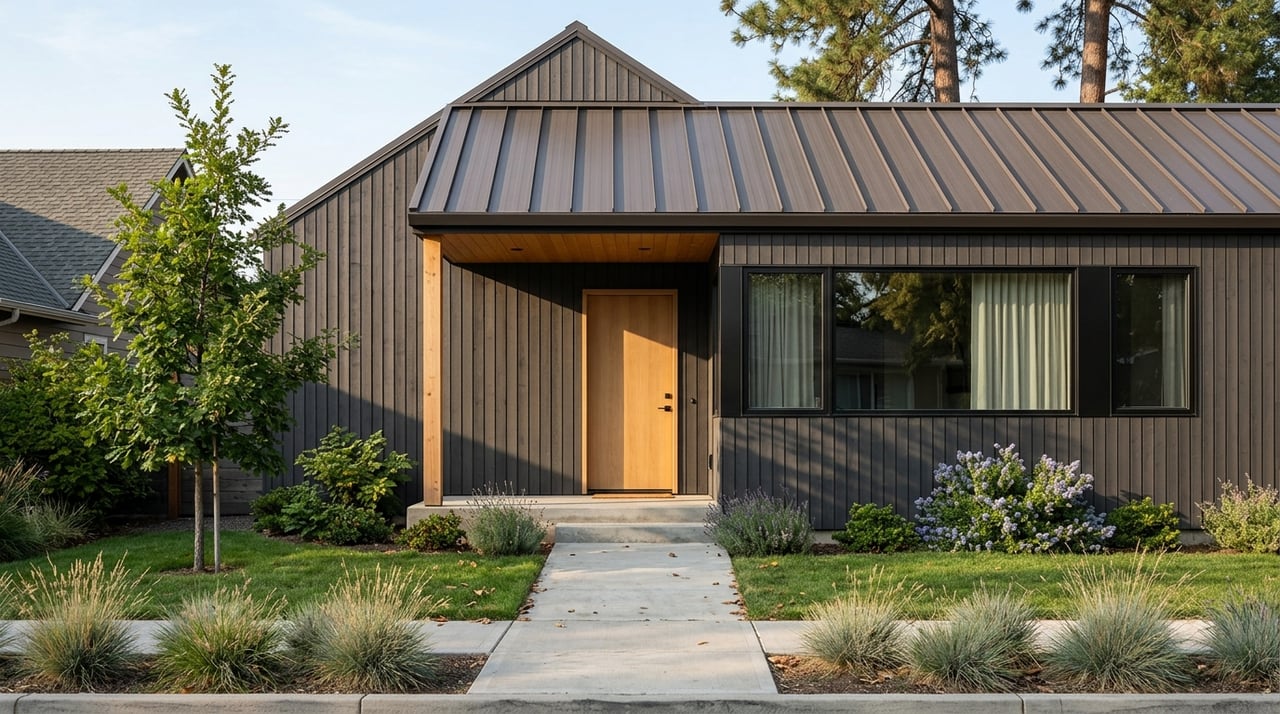
Guide to The Dalles Neighborhoods, Homes and Lifestyles
April 2, 2026
April 2, 2026
If you are thinking about buying in The Dalles, one question matters almost immediately: which part of town fits the way you want to live? In a city shaped by the Columbia River, historic streets, and rising hills, your location can influence everything from lot size and walkability to views and home style. This guide will help you understand how The Dalles neighborhoods and housing options tend to differ, so you can narrow your search with more confidence. Let’s dive in.
The Dalles is often easiest to understand as a river-and-hills city. The original townsite was platted in 1855, with streets and lots aligned toward the Columbia River, and later planning continued to distinguish the downtown core, historic residential additions, riverfront access areas, and newer edge-of-town growth zones, according to the city's historic district materials.
For you as a buyer, that means the house itself is only part of the story. A historic home near downtown may offer a very different daily rhythm than a newer home on a ridge-edge lot with broader views and a different lot layout.
Downtown gives you the most urban feel in The Dalles. Historic documentation for the John L. Thompson House describes one of the last remaining historic dwellings in the business-district core on a 50-by-100-foot lot along West Third Street, which reflects the smaller parcel pattern common to the original townsite.
If you want a location with easier access to shops, services, and the riverfront connection, downtown stands out. The city's urban renewal plan links downtown to the Columbia Riverfront, and that same plan highlights access to the Riverfront Trail, an 8-mile paved route along the south bank of the Columbia with ADA-accessible sections.
Downtown tends to appeal to buyers who value convenience and a closer-in setting. Lots are generally smaller, homes and buildings sit in a tighter street grid, and the overall feel is more compact than in the hillside or outer residential areas.
This area can make sense if you want:
If you love historic architecture, Trevitt's Addition is one of the most interesting parts of The Dalles to explore. It was one of the first areas platted in 1860, and the city's historic guidelines note a wide range of architectural styles there, including Gothic Revival, Italianate, Queen Anne, Mission, Dutch Colonial Revival, Craftsman, Norman Farmhouse, and Spanish Eclectic.
The same guidelines point out that porches are a prevalent feature and that the neighborhood follows a more residential setback pattern, including 15-foot minimum street setbacks for new construction. In practical terms, that often creates a more traditional residential streetscape than the downtown commercial core.
Trevitt's Addition usually feels more porch-oriented and neighborhood-focused than downtown. You may still find older homes and smaller lots than in some newer areas, but the layout and setback pattern often create a softer, more residential look.
This area may be worth a close look if you are drawn to:
Some buyers come to The Dalles with one priority above all else: views. For that, bluff-top and hill neighborhoods often rise to the top of the list.
The Van Dellen House in Laughlin Bluff is described in its nomination as a 1920 two-story bungalow overlooking the town and river from above the flood zone on a 0.14-acre lot. That gives a helpful snapshot of what bluff-top living can mean in The Dalles: elevated outlooks, historic character in some pockets, and often more modest yard sizes than buyers might expect.
One practical tradeoff in the hills is that homes are often positioned around scenery rather than oversized flat lots. A recent subdivision proposal above the hospital said the site design would maximize Columbia River and Mount Hood views, with daylight-basement, single-level, and two-story concepts depending on lot position, according to local reporting.
If your goal is a stronger visual connection to the landscape, that tradeoff may be worth it. If you want a large, level yard as your top priority, you may want to compare these homes carefully against other parts of town.
If you want outdoor access close to home, streets near Sorosis Park deserve attention. Located at 300 E. Scenic Dr., Sorosis Park includes a viewpoint and memorial, rose garden, walking trail, disc golf, tennis courts, softball fields, volleyball pits, playgrounds, picnic areas, and a shelter.
That mix of amenities can shape your day-to-day lifestyle in a meaningful way. Buyers who want convenient access to open space, recreation, and a scenic setting often start by comparing homes in this part of The Dalles.
Living near a major park can change how you use your neighborhood. Instead of driving across town for a walk, a picnic, or outdoor play space, those options may be much closer to home.
For many buyers, that convenience matters just as much as square footage. It can be especially useful when you want a neighborhood that supports an active routine and easy access to public amenities.
If your search is focused on newer construction, Dry Hollow and other east-side growth areas are important to know. The city's Natural Resource Inventory identifies a 433-acre Dry Hollow subarea, which suggests this is a broad planning area rather than a small historic neighborhood.
This part of town is also tied to the city's more recent housing pipeline. A 2024 proposal for a subdivision above Adventist Health Hospital and east of Dry Hollow Elementary described 29 homes of roughly 2,000 to 2,500 square feet on about 7 acres, with layouts designed around Columbia River and Mount Hood views, according to community coverage.
A separate 2025 planning update reported 26 building permits creating 34 dwelling units, two subdivisions approved for 56 lots, one middle-housing land division of five lots, and a proposed subdivision near the hospital with future homes expected in the $500,000 to $600,000 range. That points to relatively limited newer supply, often at the higher end of the local market.
Newer areas can be appealing if you want more modern floor plans, less immediate maintenance, and home designs shaped by current buyer preferences. In The Dalles, that may also mean ridge-edge lots, larger homes, and stronger emphasis on outlooks.
These areas may fit you best if you are looking for:
One of the easiest ways to understand your options in The Dalles is through zoning and the housing mix the city expects over time. The city's zoning code provides a useful lot-size guide.
In RL low-density residential zones, detached single-family homes require at least 5,000 square feet and 50 feet of width. In RM medium-density zones, detached homes require at least 4,000 square feet, while townhome lots can be as small as 2,000 square feet. In RH high-density zones, detached homes can be as small as 2,500 square feet, and townhome lots can be as small as 1,500 square feet.
The same code says manufactured homes are allowed on most land where single-family homes are allowed, except in historic districts and on land adjacent to historic landmarks. That gives some buyers more flexibility depending on budget, location goals, and housing type preferences.
The city's housing analysis says 65% of new units built from 2018 to 2023 were detached single-family homes and 35% were attached housing. Looking ahead, the city projects a continued mix that includes detached homes, multifamily housing, manufactured homes, duplexes, and townhomes.
That same analysis says lower-middle ownership demand is strongest in the $250,000 to $500,000 range, with smaller detached homes on smaller lots, townhomes, condos, and manufactured homes often filling lower- and middle-price niches. Local reporting also notes that the current code allows detached duplexes and other middle-housing types in low-density zones, not just traditional single-family development, according to the 2025 housing update.
If you are trying to narrow your search, this quick framework can help:
The best neighborhood for you depends on what you want your day-to-day life to look like. If you care most about character and central location, historic areas may be the best match. If your top priorities are views, newer construction, or flexible housing options, other parts of The Dalles may make more sense.
That is where local guidance can save you time. When you compare neighborhood patterns, lot layouts, housing types, and current inventory together, it becomes much easier to focus on homes that truly fit your goals.
If you want help sorting through The Dalles neighborhoods, historic homes, newer subdivisions, or view properties, Chrissy & Brock Wood are here to help you navigate your options with clear local insight and practical guidance.
Stay up to date on the latest real estate trends.
Chrissy and Brock cover a lot of real estate ground and knowledge and have the experience and expertise to do it all. They also have established relationships and connections with local resources to help ensure that clients are well taken care of before, during, and after a transaction.
BROCK & CHRISSY WOOD
Chrissy Wood - Licensed in WA & OR
(425) 418-3988
Brock Wood - Licensed in WA & OR
(509) 637-4400
315 Oak St Ste 200 Hood River OR 97031