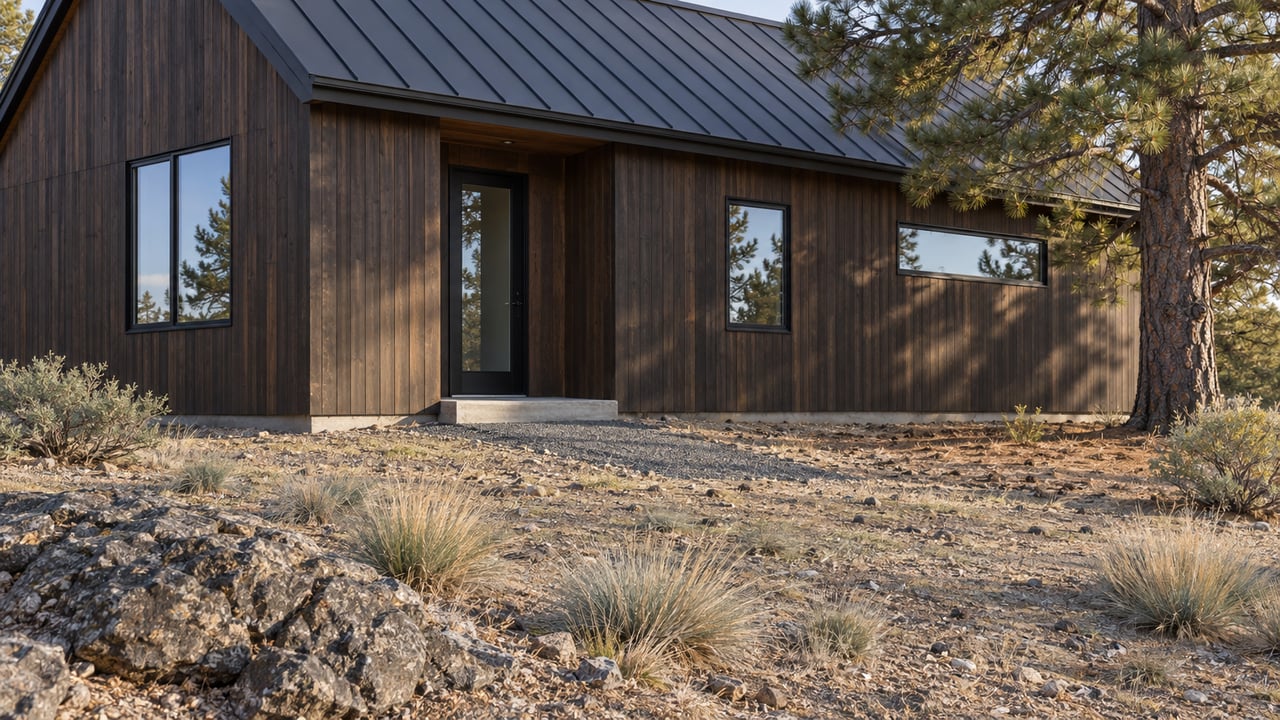
What the Water Actually Costs When You Buy Acreage Near Goldendale
October 1, 2026
October 1, 2026
Sundale Orchards has been growing apples and cherries in Klickitat County since the 1950s. A few years ago, the operation wanted to expand its irrigated ground from 106 acres to 151. On paper that sounds like a planting decision. In practice it turned into a water rights case: swapping old impact sprinklers for high-efficiency micro sprinklers freed up enough water to spread across the new acreage, but only after a water rights consultancy called Coho Water Resources built the technical case, drafted the change applications, and carried them through the Klickitat County Water Conservancy Board and the Washington Department of Ecology.
That's an orchard-scale story, but the mechanism behind it applies just as directly to someone comparing two five-acre listings outside Goldendale that look identical on a map. The price per acre might match. The zoning might match. What's underneath the ground almost never does, and neither does the path you'd have to take if you ever wanted to change how that water gets used.
Most of the acreage around Goldendale and the High Prairie plateau to its north sits on the Columbia River Basalt Group, layers of lava flow that in places run close to a mile thick and date back millions of years. Faulting and folding over that time broke the rock into a patchwork rather than one continuous layer. The result, according to the local water monitoring done through High Prairie's community council, is that groundwater doesn't collect into one shared aquifer under the plateau. It pools into dozens of separate pockets, each fed only by rain falling directly above it, each with its own depth, capacity, and reliability.
Klickitat County has tracked this directly. Since 2007 it has monitored a network of roughly 23 wells in the High Prairie area, and the data collected so far show water levels holding fairly steady, with two or three wells in decline. The county's own reporting is careful to note that the monitoring period is still too short to draw firm conclusions about long-term trends.
What that means for a buyer is simple to state and easy to miss. A neighbor's well producing well for forty years tells you almost nothing about the parcel you're actually bidding on. The county's guidance on rural property is blunt about this: groundwater might not be available on your site even though a well a few hundred feet away performs fine, because the geology can change pocket to pocket.
If you've already read up on finding usable acreage in Goldendale, you've seen how zoning, access, and parcel size shape what a piece of land can support. Water sits underneath all of it as a separate question, and it splits into two very different situations depending on how much you plan to use.
| Planned use | Water right required? | Where it gets decided |
|---|---|---|
| Single home, domestic use up to 5,000 gallons a day | No, exempt under state law (RCW 90.44.050) | Confirmed through the well log on file with the state |
| Non-commercial lawn or garden, half acre or less | No, exempt under the same statute | Same |
| Irrigating an orchard, vineyard, pasture, or acreage beyond the exempt threshold | Yes | Washington Department of Ecology, or the Klickitat County Water Conservancy Board if it's a change to an existing right |
| Changing ownership, point of withdrawal, or drilling a replacement well on an already-established water right | Often yes, depending on complexity | Klickitat County Water Conservancy Board |
A buyer who wants a house, a lawn, and a small garden is almost always operating inside the exempt category. A buyer who wants to run livestock at scale, plant an orchard, or irrigate several acres is stepping into a different regulatory lane, and that lane runs through a specific local body most listings never mention.
The Klickitat County Water Conservancy Board has existed since 1999, created by resolution of the county commissioners and operating under state law (RCW 90.80 and WAC 173-153). It meets monthly, on the second Tuesday from 5 to 7 p.m., at the county's Administrative Services Building at 115 W Court St in Goldendale, with a virtual attendance option posted alongside each meeting's agenda.
The board doesn't issue brand new water rights. That still goes through the Department of Ecology. What it does handle is changes and transfers to rights that already exist: a change in ownership, a change in the point of withdrawal, a replacement well, a shift in how the water gets used. According to the county's own FAQ, applying costs a flat $1,000 plus whatever legal notice advertising the application requires, and the timeline is not fixed. Some applications close out within a year. Others, depending on how complicated the change is and how motivated the current water right holder is to cooperate, stretch across decades.
That range matters more than any single number in it. A buyer who assumes a water right transfer is a same-day formality, similar to updating a mailing address, is working from the wrong model. A buyer who assumes it's always a multi-year fight is also wrong. The honest answer is that it depends on the specific right, and the only way to know is to ask before writing an offer, not after closing.
A due diligence list for water on Goldendale-area acreage looks different from a standard home inspection checklist, because most of what matters here predates the house.
None of this replaces legal or hydrogeological advice on a specific parcel. It does mean the difference between negotiating from information and negotiating from a listing photo.
Does every property near Goldendale need a water right? No. A single home using up to 5,000 gallons a day for domestic purposes, along with a modest lawn or garden, typically falls under the state's exemption and doesn't require one. Larger-scale irrigation or additional uses can push a property past that threshold.
If I want to change an existing water right, does it always take years? Not always, but it can. The Klickitat County Water Conservancy Board notes that timelines vary widely based on how complex the change is and how cooperative the existing right holder is, ranging from under a year to considerably longer.
Who do I actually contact locally? The Klickitat County Natural Resources Department administers water right change and transfer applications through the county's Water Conservancy Board, and its contact information is posted on the county's website alongside the board's meeting schedule.
Is this only a concern for large acreage or agricultural buyers? Mostly, yes. A buyer planning to live on a smaller parcel with typical household use is usually fine within the exempt category. The complexity shows up once plans grow to include irrigation, livestock at scale, or additional structures that raise total water demand.
If you're comparing acreage near Goldendale and want a straight read on what a specific parcel's water situation actually looks like before you write an offer, Chrissy & Brock Wood at Gorge Homes & Land work this ground regularly and can walk through it with you. Reach out for a complimentary consultation before you fall for the listing photo instead of the land underneath it.
This article is general information, not legal, tax or financial advice. Consult a qualified professional about your situation.
Stay up to date on the latest real estate trends.
Chrissy and Brock cover a lot of real estate ground and knowledge and have the experience and expertise to do it all. They also have established relationships and connections with local resources to help ensure that clients are well taken care of before, during, and after a transaction.
BROCK & CHRISSY WOOD
Chrissy Wood - Licensed in WA & OR
(425) 418-3988
Brock Wood - Licensed in WA & OR
(509) 637-4400
315 Oak St Ste 200 Hood River OR 97031