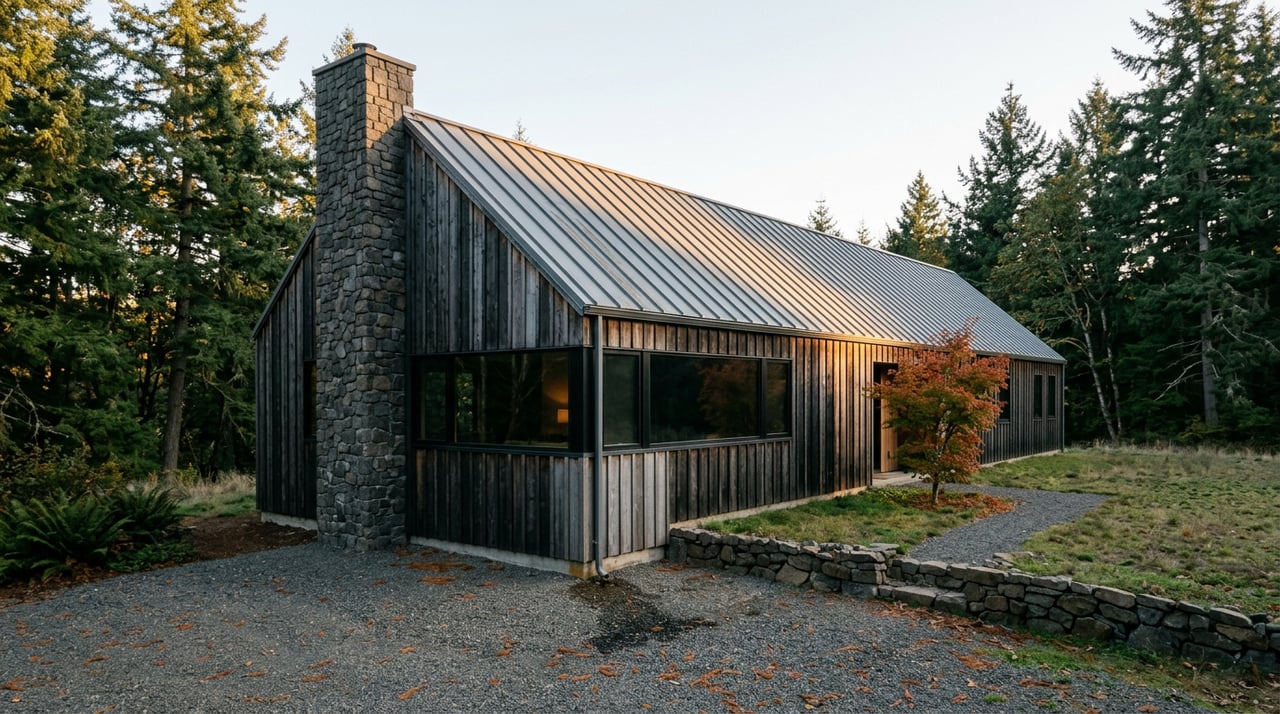
In Snowden, the Insurance Quote Is Deciding Deals Before the Price Does
September 24, 2026
September 24, 2026
A buyer finds ten wooded acres outside White Salmon, in the rolling plateau country everyone around here just calls Snowden. The price per acre looks fair. The parcel has power to the lot line, a spot cleared for a well, room for a shop. Before writing an offer, the buyer starts calling insurance carriers to find out whether they can line up a policy before closing. The offer goes in and gets accepted.
That call is where more Snowden deals are stalling right now than the purchase price ever does.
Klickitat County has spent the past year in the middle of a documented wildfire insurance squeeze, and Snowden's own weather may put it in a different conversation than the rest of the county, if a buyer knows to ask the right question at the right time. The question isn't what the land costs. It's what a carrier will charge to insure it, and whether they'll write the policy at all.
This isn't a rumor picked up from a neighbor. Klickitat County's Department of Emergency Management opened a formal Wildfire Property Insurance Survey in 2025, asking residents to document denials, non-renewals, and steep premium increases going back three years. The county wasn't guessing that something had shifted. Officials had heard enough secondhand accounts that they built a survey to measure it directly, with results meant to inform conversations with state regulators.
By late 2025, the Goldendale Sentinel was reporting that homeowners across the county were trading stories on social media about sudden cancellation notices and carriers quietly pulling back from wildfire-exposed addresses. Some residents described spending weeks calling multiple companies just to find one willing to write a policy at any price.
That local pattern lines up with what the state is seeing everywhere east of the Cascades. Washington's Insurance Commissioner reported in February 2026 that policy non-renewals and cancellations statewide have roughly doubled since 2021, climbing from 11,763 to 24,106. Carriers are leaning on wildfire risk scores built from vegetation density, terrain, and defensible space around the structure, and when a property scores poorly, the letter arrives whether the homeowner has ever filed a claim or not.
That's the story most people looking at forested acreage in this county already half expect to hear. What they don't expect is that Snowden might not fit it as neatly as the headlines suggest.
Snowden sits up on a plateau northeast of White Salmon, high enough and wet enough that it gets meaningfully more snow than the town below it. That's true every winter, and it matters here for a reason beyond scenery. Heavy, reliable snowpack keeps ground fuels wet longer into the season than the drier, more open range country elsewhere in the county, and the dense tree cover that makes Snowden feel remote also breaks up the kind of sustained wind that drives fast-moving wildfire. Compare that to the open, rolling grassland closer to Goldendale, where wind has room to run across exposed hillsides with far less to slow it down.
None of that makes Snowden fireproof. It does mean the risk profile an insurer is actually pricing on a specific parcel here can look different from the risk profile driving cancellations in more exposed parts of the county, even though both addresses would show up on a map search as "wooded acreage in Klickitat County."
That distinction only matters if a buyer knows to bring it up. Most don't, because most people shopping acreage compare price per acre and view corridor, not fuel moisture and wind exposure.
Klickitat County doesn't manage wildfire planning as one blanket document covering the whole county. Its Community Wildfire Protection Plans are filed area by area, which tells you the county itself has never treated wildfire risk as a single number applied everywhere:
That area-by-area approach mirrors how insurers actually underwrite. The West Klickitat Regional Fire Authority, based in Husum, publishes its own Property Protection Rates and says plainly that the fire department rating for a given area feeds directly into what a homeowner pays for coverage. A parcel served by a well-rated department with fast response times and adequate water access is a different underwriting conversation than one further from a station, even if both sit inside the same county.
This is the part that gets lost when the conversation stays at "Klickitat County wildfire insurance crisis." The crisis is real. It's also not evenly distributed, and the tools the county and local fire districts already use to separate one area's risk from another's are exactly the tools a buyer should be asking about before writing an offer, not after.
The practical fix here is simple and almost nobody does it early enough. Get an actual insurance quote on the specific parcel before you write an offer, not after it is accepted and definitely not after closing. A price per acre tells you what the land costs today. An insurance quote tells you what it will cost to keep, and whether a carrier is willing to write the policy at all.
A few things worth asking, based on how Washington actually regulates this:
If the seller already carries a policy, ask whether they've received a non-renewal notice. Washington law requires insurers to give 60 days of written notice before non-renewing a policy, under RCW 48.18.2901, and that notice has to include the reason. A recent non-renewal on the current policy is a direct signal about how the next carrier is likely to price the same address.
Ask about defensible space around the structure, not just the parcel line. Insurers routinely inspect new properties before writing coverage, and cancellations can follow if they find trees growing close to the home, brush or debris on the ground, or flammable material stored outside. Snow load helps with fuel moisture across the season. It doesn't clear the ten feet around a house that an inspector is going to look at directly.
If a standard carrier declines the address outright, Washington's Fair Access to Insurance Requirements plan exists as a backstop, though it's worth treating as a last resort rather than a plan, since FAIR Plan coverage is typically narrower and pricier than a standard policy.
None of this should scare a buyer off Snowden. It should change the order of operations. Get the quote before you're emotionally and financially committed to a specific ten acres, not after.
Does a standard Washington homeowners policy cover wildfire damage? Washington's Insurance Commissioner says standard policies in Washington include fire coverage, wildfire included. The issue right now isn't whether wildfire is covered once you have a policy. It's whether a carrier will write or renew the policy in the first place on a wildfire-exposed address.
Does snow really reduce fire risk, or is that just local folklore? Reliable snowpack keeps ground fuels wetter later into the fire season and Snowden's dense canopy limits sustained wind, both of which are real factors in fire behavior. That's different from saying insurers automatically price Snowden lower. Get the quote on the specific parcel rather than assuming the general pattern applies to every address.
Should I wait for the county's insurance survey results before buying? Not if the right property is in front of you. The survey exists to help county officials advocate at the state level over time. It won't change what a carrier quotes you on a specific address this month. A direct quote now tells you more than a countywide report will.
The price on a Snowden listing has never been the only number that matters, and this year it isn't even the most important one. The insurance quote is doing the real gatekeeping, and it's specific to the parcel, the fire district, the defensible space, and the carrier you happen to call, not to the county as a whole.
That's exactly the kind of local detail that separates a smooth acreage purchase from a stalled one. If you're comparing wooded parcels in Snowden against other Gorge acreage, Gorge Homes & Land can walk you through what to check before you write an offer, including how to line up an insurance quote early enough that it informs your decision instead of derailing your closing. Get your instant home valuation or schedule a complimentary consultation whenever you're ready to talk specifics about a parcel you have in mind.
This article is general information, not legal, tax or financial advice. Consult a qualified professional about your situation.
Stay up to date on the latest real estate trends.
Chrissy and Brock cover a lot of real estate ground and knowledge and have the experience and expertise to do it all. They also have established relationships and connections with local resources to help ensure that clients are well taken care of before, during, and after a transaction.
BROCK & CHRISSY WOOD
Chrissy Wood - Licensed in WA & OR
(425) 418-3988
Brock Wood - Licensed in WA & OR
(509) 637-4400
315 Oak St Ste 200 Hood River OR 97031