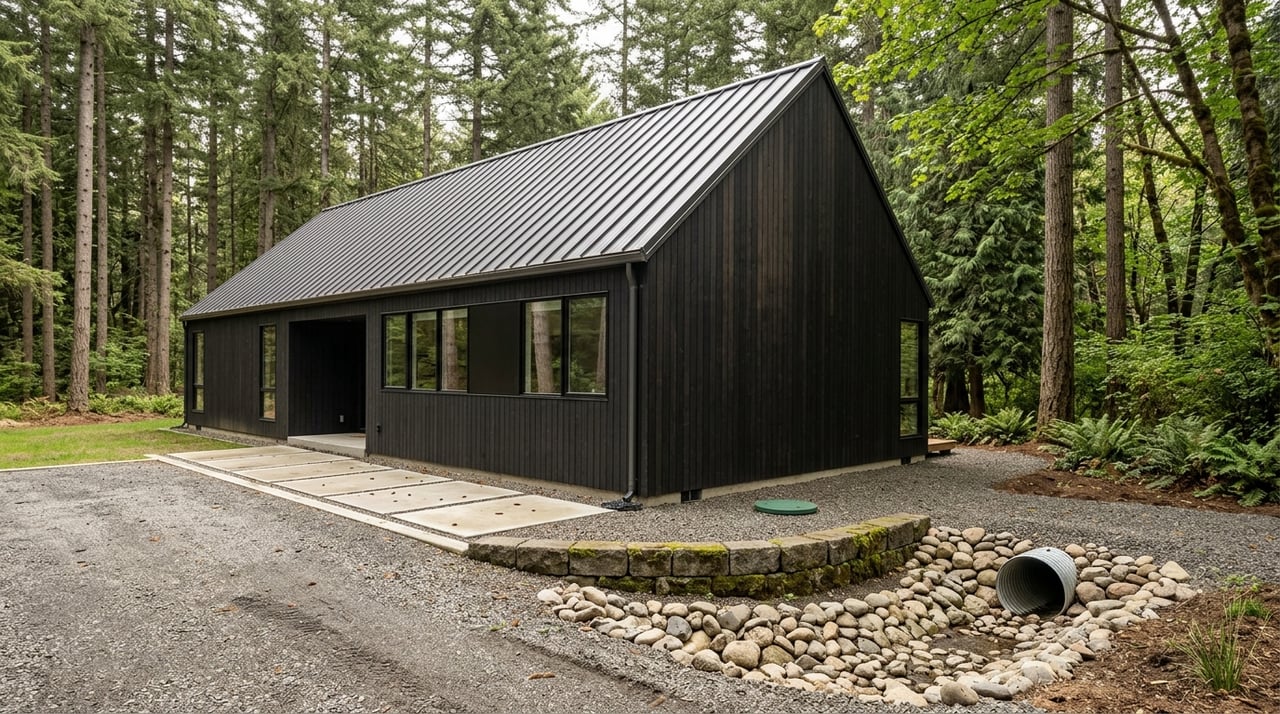
Buying A Home In Carson’s Forest And River Corridors
April 23, 2026
April 23, 2026
If you are dreaming about a home near the woods, river access, and trailheads in Carson, you are not just buying square footage. You are also buying into a very specific kind of day-to-day living shaped by forest roads, seasonal access, utility systems, and land-use rules. The good news is that with the right due diligence, you can move forward with more clarity and fewer surprises. Let’s dive in.
Carson sits in the Wind River corridor, where Forest Road 30 and the Wind River Highway connect into the Gifford Pinchot National Forest. Forest Road 65 also begins between Carson and Stabler, creating access toward campgrounds, waterfalls, and trailheads.
That setting is a big part of the appeal. It also means your home search should look beyond the house itself and focus on how access, public land, and parcel restrictions could affect your plans over time.
In Carson’s forest and river corridors, access can be one of the most important parts of a property purchase. A home that feels easy to reach in July may feel very different during winter weather, heavy rain, or emergency road closures.
The Forest Service notes that winter, storm, and emergency closures can affect forest roads in this corridor. If a property depends on roads near or connected to forest access routes, it is smart to ask how reliable that route is across all four seasons.
Before you move forward, ask whether the road serving the property is:
You should also ask for any recorded easements, surveys, CC&Rs, and maintenance agreements. Skamania County notes that road-related permits are handled through its Road & Engineering Division, and it provides private road and approach standards through Public Works.
If the road is shared, get clear on who handles plowing, grading, culvert work, and repairs. County materials also indicate that a recorded road maintenance agreement is strongly encouraged, which can be especially important when multiple owners rely on the same access route.
The Skamania County Auditor Recording Office records maps, surveys, liens, and real estate documents. That makes it one of the key places to confirm whether the access rights and shared-use agreements you were told about are actually recorded.
For many rural buyers, this step matters just as much as the inspection. If access terms are vague, future use and future resale can become more complicated.
Many Carson-area properties rely on private wells rather than large public water systems. That means water due diligence should happen early, especially if you are comparing acreage, cabins, or homes outside more typical in-town infrastructure.
Skamania County’s drinking-water program reviews individual wells, private-group wells, water adequacy, and water availability for building permits. The county also notes that proposed well and septic locations must appear on the site plan during building permit review.
A seller may say the water is fine, but that is not the same thing as a current lab result. The Washington Department of Health recommends that private well owners test annually for coliform bacteria and nitrate, since many contaminants cannot be seen, smelled, or tasted.
For you as a buyer, a recent water-quality report is far more useful than a general assurance. If the property has a well, ask for the well log and the latest test results.
Some Carson-area properties may use a shared well, and Skamania County notes that a two-party shared-well exemption can apply in some situations. If that applies to the property you are considering, ask a few direct questions right away.
You will want to know:
Septic systems are another major part of rural home buying in Carson. If a property is served by on-site sewage, you need more than a quick verbal summary of its condition.
Skamania County says its on-site sewage program is designed to protect public health and the environment through proper septic design, installation, and maintenance. The county also notes that some lots require a designated replacement area and that inspection frequency depends on the type of system.
When reviewing a property, ask for:
This is especially important because the county states that a current system-status report must be on file when a property is offered for sale, and that report is considered current if it was completed within one year of the sale date.
Simple gravity systems are typically inspected every three years, while pressure-distribution systems are typically inspected yearly. The county also notes that many septic tanks need pumping every three to five years, which gives you a useful maintenance baseline.
If a parcel is near the Columbia River corridor or other regulated water features, shoreline and floodplain review can affect what you can do with the property later. That matters whether you want to build, expand, clear land, or simply understand future risk.
Skamania County says its Shoreline Master Program guides shoreline use and development to protect natural resources and public access. In practical terms, that means waterfront or near-water parcels may involve another layer of review.
The county also identifies frequently flooded areas as critical areas, and its floodplain materials state that the 100-year floodplain is regulated. New or substantially improved residential structures in those areas must elevate the lowest floor above base flood elevation.
Before you get too far into a purchase, review FEMA flood maps and ask how county floodplain rules apply to the parcel. For some buyers, this can affect building plans, insurance costs, and overall comfort with the property.
Carson-area property can come with more land-use layers than buyers expect. Skamania County says its Planning Division implements the Carson subarea plan along with zoning, critical areas, shoreline, and National Scenic Area codes.
That means a parcel may look straightforward on first glance but still face restrictions tied to wetlands, wildlife habitat, geologic hazards, flood areas, or scenic review. The county’s critical areas information includes wetlands, fish and wildlife habitat conservation areas, geologically hazardous areas, critical aquifer recharge areas, and frequently flooded areas.
The Columbia River Gorge National Scenic Area is another major factor in this market. Skamania County explains that land-use rules there differ from most places, and that almost all structural development and ground-disturbing activity requires some level of review.
The county also notes that scenic mitigation can involve siting, screening, colors, and materials. Review timelines can take seven to nine months in many cases, or three to four months for some expedited projects.
If you think you may want to add a shop, build an accessory structure, improve a driveway, or clear part of the parcel, ask about these rules early. It is much easier to adjust expectations before you buy than after closing.
Living close to forests and ridgelines can be beautiful, but it also comes with real hazard considerations. Skamania County Emergency Management says the county stretches from the Columbia River Gorge through forested ridges and coordinates responses to wildfires, floods, and landslides.
Its hazard planning materials describe wildfire, drought, and landslide risk as significant countywide concerns. For buyers, this is a reminder to look at site conditions, access routes, vegetation, slope, and emergency planning as part of the full decision.
One of Carson’s biggest draws is the access to outdoor recreation. Nearby Forest Service resources highlight access points like Big Hollow Trailhead and Trout Creek Trailhead, with routes leading toward the Pacific Crest Trail, Trapper Creek Wilderness, Panther Creek Falls, and more.
That kind of access can absolutely add to a property’s appeal. But it is not always a simple price premium.
Research on homes near natural amenities suggests the effect can be positive in some settings and mixed in others, especially where congestion, noise, road upkeep, hazard exposure, or use restrictions become part of the experience. In Carson, access to trails and forest roads may support demand, but the value impact is often highly parcel-specific.
If outdoor access is one reason you are buying, ask:
That way, your expectations line up with how the property really functions throughout the year.
When you are touring homes, reviewing disclosures, or talking with lenders and inspectors, keep this short list handy:
In this part of Skamania County, the inspection record, title record, and permit history can matter just as much as the view. A beautiful setting is still the goal, but the right due diligence helps you enjoy it with fewer unknowns.
If you are planning a move in Carson or anywhere in the Gorge, Chrissy & Brock Wood can help you evaluate the details that make rural and recreation-oriented properties different, from access and acreage questions to the bigger picture of long-term use and resale.
Stay up to date on the latest real estate trends.
Chrissy and Brock cover a lot of real estate ground and knowledge and have the experience and expertise to do it all. They also have established relationships and connections with local resources to help ensure that clients are well taken care of before, during, and after a transaction.
BROCK & CHRISSY WOOD
Chrissy Wood - Licensed in WA & OR
(425) 418-3988
Brock Wood - Licensed in WA & OR
(509) 637-4400
315 Oak St Ste 200 Hood River OR 97031